Charles Edward Ball, 1917–1995
In the early 1950s, on the upper floor of a two-storey house at 232 Rua Conselheiro Zacharias in the Jardim Paulista district of São Paulo, a light burned late most evenings. The city outside was in the middle of a remarkable industrial transformation, filling with the noise and energy of a metropolis expanding in every direction — and downstairs the household went about its business, a small English island in a Brazilian city: maids, children, the smell of roasting coffee drifting in from the markets, huge hands of bananas ripening in the shed. Ted Ball, for the most part, was upstairs. His son Graham would remember him appearing at meals, occasionally at the English club at weekends, but otherwise absorbed in his study, surrounded by the paperwork that came with managing a power distribution network covering seven and a half thousand square miles — the largest power group in South America. He had a large collection of LPs, James Last and music of that kind, and he was strict with the children, and at times quite loving, but he was not a man who made himself easily knowable.
His son Graham would call him, in later life, his absolute hero. It is a tribute that contains more than it first appears to.
Formation
Charles Edward Ball, known as Ted, was born on 27 July 1917 in the busy industrial town of Rotherham in Yorkshire. His father, also Charles Edward, was a successful bird seed merchant and the family lived in a large house at 19 Eastwood Mount with mother Clara keeping the home. A brother, Ron, arrived before Ted had turned two and by the age of ten the Balls had left Rotherham for the rural surroundings of Helpringham in Lincolnshire. Charles Senior was unwell and the move to the fresher air of Clara’s home village was the first of many in Ted’s life.
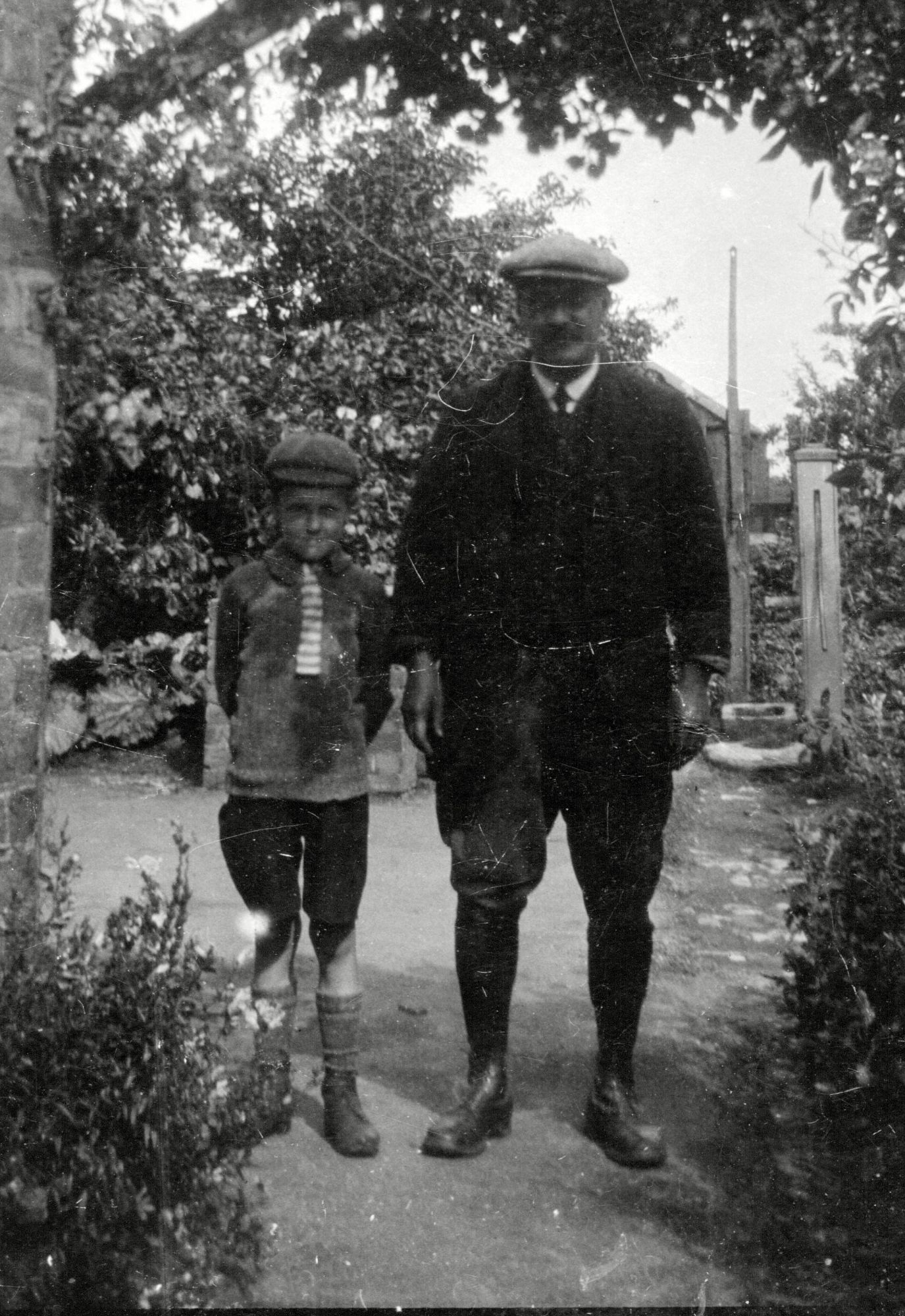
Ted and his father, Charles Senior
He and his brother attended Donington Grammar School, receiving a good academic and sporting education. At home, their father was strict and valued hard work and enterprise. Their mother involved them in the Methodist church, where they were encouraged to pursue self-improvement and a moral life.
In 1934, when Ted was seventeen, his father Charles Senior died at fifty-eight, and in the same year he began an apprenticeship at the Sleaford Urban District Council Electricity Department. It was perhaps an abrupt transition to adulthood and an opportunity to emerge from his father’s shadow. He would spend the next four years mastering the grammar of his trade: substations, underground cables, overhead lines, the ordered movement of electrical power through systems that could not afford to fail. He gained technical qualifications through evening study at Lincoln Technical College, by 1938 he had graduated to Assistant Mains Engineer, and by early 1939 while still living at Rose Cottage in Helpringham with his mother and grandmother, Ted was responsible for the distribution of electricity across the local area, twenty-one years old and operating at the edge of something he could not yet see coming.
He had learned, in those years, to be the person who kept things running. That habit of mind would prove to be the making of him, and in some ways the thing that most defined the texture of his family life.
War: Purpose Found
When war was declared in September 1939, Ted Ball read the newspaper advertisements seeking electrical engineer officers for the Royal Navy with the pragmatic eye of a man who recognised an obvious fit between his training and the navy’s requirements. He presented himself for interview at University College Nottingham, was assessed, and was turned away — not for any lack of ability, but simply because there were no minesweepers available for him to serve on. He was told to wait and to do nothing until he heard further. October came, and a young man impatient at the margins of a war that seemed to be starting without him made a decision: the Royal Engineers would take him, and so into the army he went, submitting to what he would later recall as mainly square-bashing, rifle drill, and general training before the navy finally sent for him in January 1940. One day he was in the army in ordinary uniform; the next he was in the officers’ mess at Portsmouth, a sub-lieutenant in the Royal Naval Volunteer Reserve, assigned to HMS Vernon.
In late May 1940, as German Army Group A drove the Allied forces in desperation toward the beaches of Dunkirk, Sub-Lieutenant Ball came down the Belgian coast aboard converted deep-sea trawlers, responsible for the special minesweeping equipment that kept the sea lanes passable for the evacuation fleet. German aircraft dropped mines continuously, and the evacuation itself was possible only under the cover of darkness, with approximately 800,000 men eventually brought home across those narrow waters. His task was simply to keep the gear working against every interruption and danger the situation could produce.
He was lucky, he would say afterward — they nearly “caught it” on the way home, with bombs falling across the stern of the ship but never quite striking it. That was the extent of his self-drama about Dunkirk. He was mentioned in despatches. He did not, in later life, dwell on it.
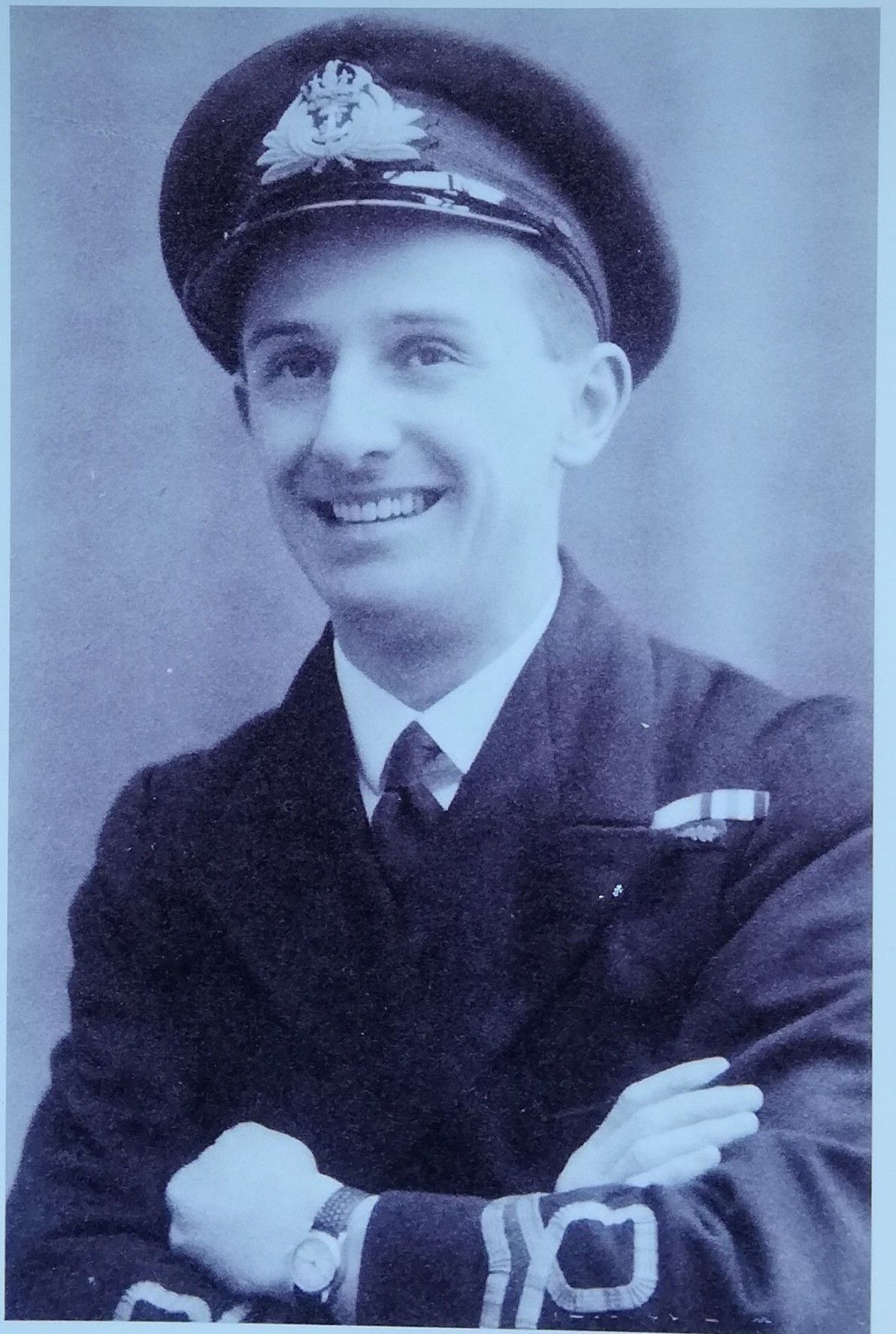
Sub-Lieutenant Ball
The war that followed for Ted was not the war of combat and heroic charges but the war of systems and long technical labour: coils of degaussing wire passed through bulkheads and cabins, amperage settings that had to be precisely calibrated or the equipment was useless, fishing trawlers inspected in ports around the English and Scottish coastline to ensure their conversion to naval minesweepers was proceeding correctly. When America joined the war and supplied wooden-hulled minesweepers that required no degaussing at all there was adjustment, and then continuity. The work was unglamorous and unrelenting and essential, and Ted Ball was well suited to all three of those qualities. It was also during this time that he became good friends with a fellow engineer, John Cranmer, one of few relationships he would maintain in a very private life.
In 1943 an assignment came that would take him far from English waters. Port Party “Fustian,” covering the invasion of Sicily and the landings in Southern Italy, became the beginning of what he would later describe as the most interesting and arduous part of a six-and-a-half-year naval interlude — a phrase that manages to contain the entire Mediterranean theatre of war within the word ‘interlude’, as though it were a professional digression rather than the defining experience of his adult life. He moved south and east across the theatre, eventually arriving at Ancona as Minesweeping Electrical Officer for a stretch of Adriatic coast running from Brindisi all the way up to Trieste, overseeing a staff of twenty British and ninety Italian personnel and carrying responsibility for operations across hundreds of miles of coastline.
In December of 1943, while serving as Base Electrical Officer in Bari, he was present for one of the most devastating German raids of the entire war: a surprise attack at dusk on a harbour that was fully lit and crowded with merchant vessels carrying supplies for the Allied advance, the result of which was eighteen ships sunk, massive fires and explosions among ammunition and fuel cargoes, and the sudden destruction of the port infrastructure on which an entire army depended. He would describe it afterward as a somewhat breathtaking experience, and then he would describe it no further.
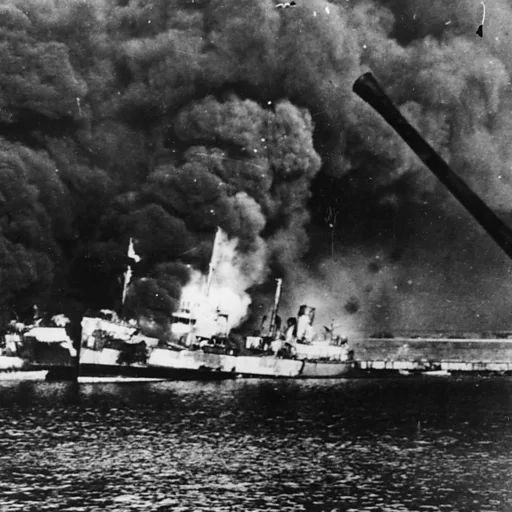
Seventeen Allied ships go up in flames after a German bombing raid in Bari
In May and June of 1945, with the fighting in Europe formally concluded but the work of war still lethally ongoing, he was in Venice, moving through narrow canals and enclosed basins clearing mines from a city that remained perfectly capable of killing everyone involved without warning. The enemy’s booby traps were well made and cunningly placed, and on at least one occasion the crew were misled by enemy charts showing false mine positions, so that mines exploded at close quarters several times before the truth of the situation became clear. The special equipment and crew were nearly lost. Ted finished the job and came home.
Demobilisation came in the spring of 1946. He returned to Sleaford, and later — with a candour that might surprise those who did not know him — he would acknowledge that the war had acted, in his case, as a stepping stone to success. It is not callousness, that statement, but the honest accounting of a man who understood that his particular aptitudes — technical precision, composure under pressure, the capacity to maintain complex systems in chaotic conditions — had found in the war their ideal application. He had been fully used, and he knew the value of that.
Brazil: Professional Peak, Domestic Distance
The war had not only shaped Ted’s career but also created the circumstances which led to him meeting his future wife, Joan Bowles. She was born in Sheerness, a port town on the Isle of Sheppey in north Kent, and was working as a nursemaid there before war broke out. It was also here that the Navy established the largest minesweeper base in the UK and where Ted served as Electrical Officer at HMS Wildfire. Ted married Joan in 1941 at the Methodist Church Hall.
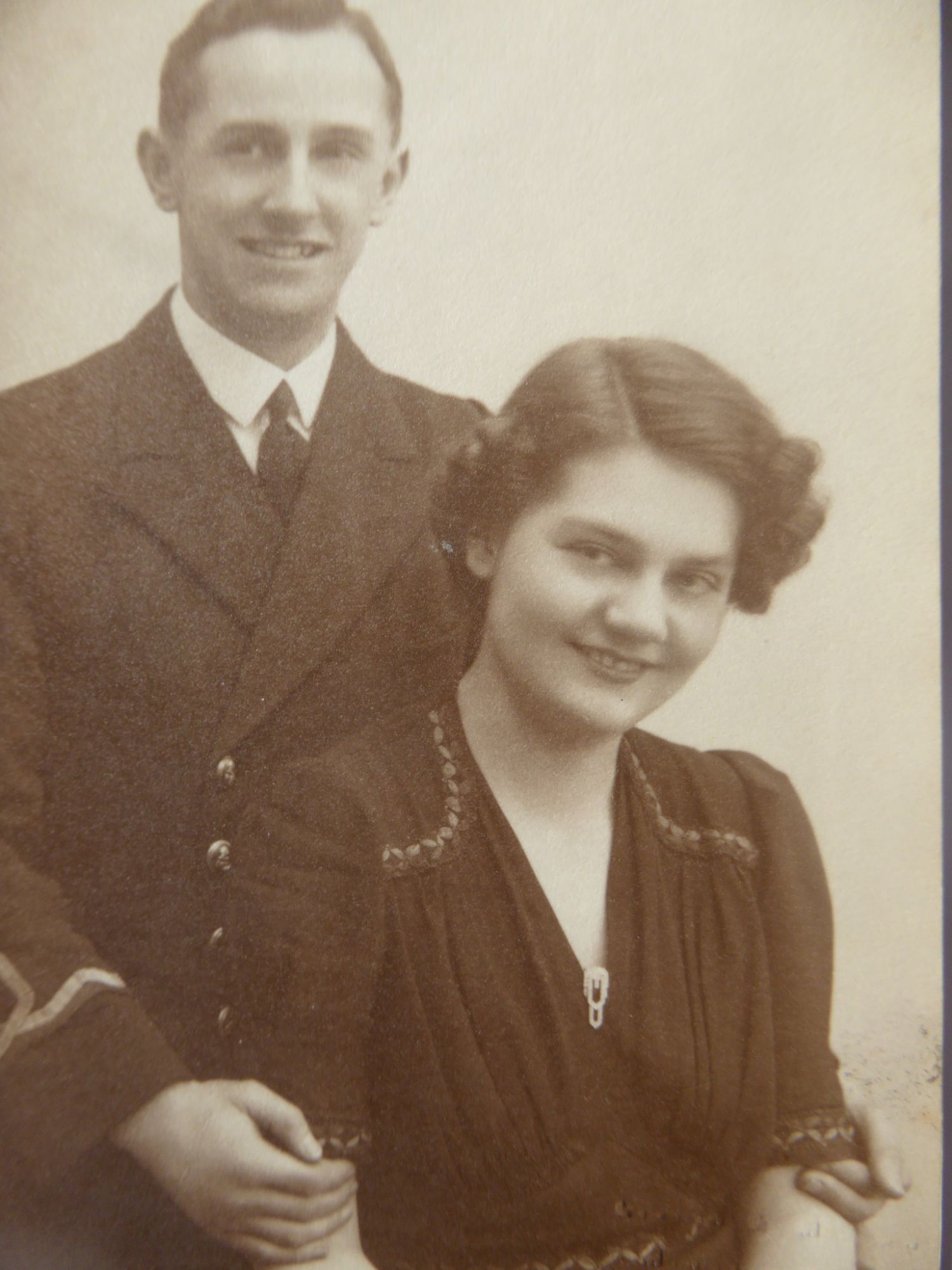
Ted and Joan Ball
By 1948, Ted had fathered a son, Graham, accumulated post-war experience with Luton Corporation’s Electricity Department, and positioned himself for something that must have seemed, from Rose Cottage in Helpringham, almost impossibly far: a posting as Distribution Technical Studies Engineer with the São Paulo Tramway, Light and Power Company, responsible for the largest power network in South America. He departed alone on 21 December 1948 aboard the Uruguay Star with Joan staying behind, pregnant with their second child. Joan, Graham and new daughter Christine Jane joined Ted in Brazil seven months later.
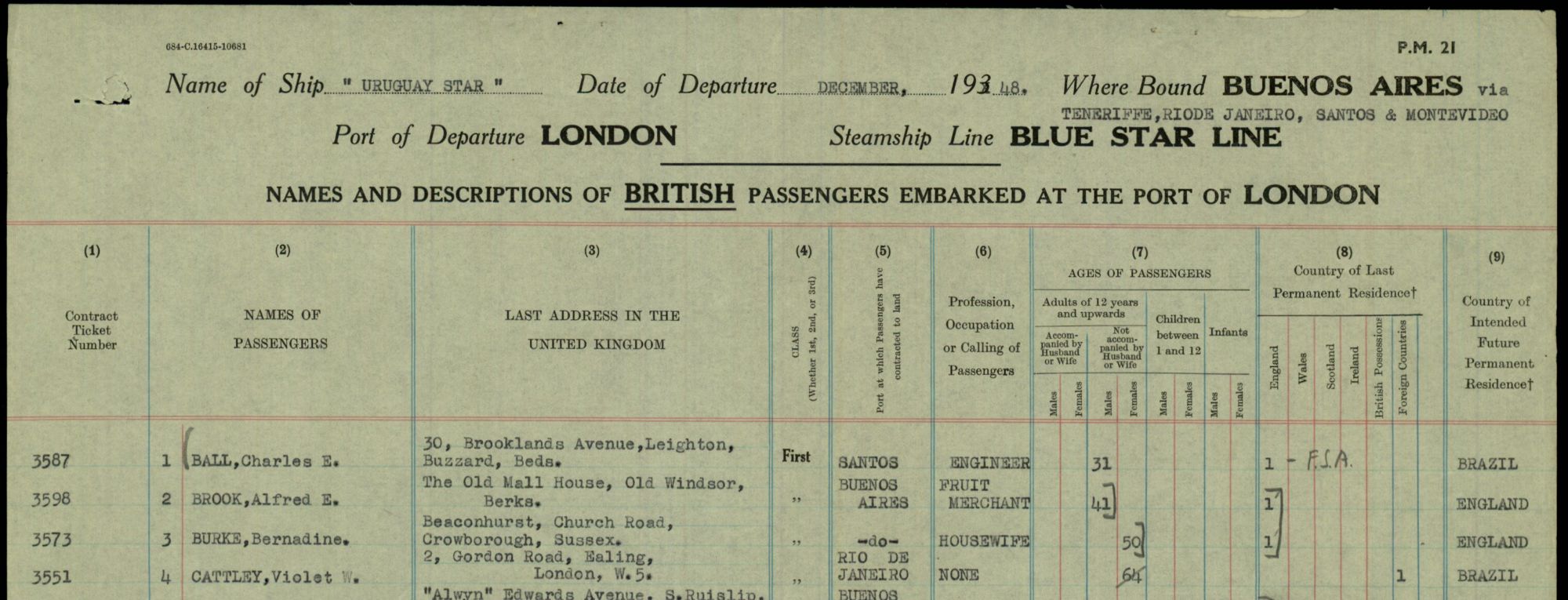
Ted sails alone to Brazil
In São Paulo he managed distribution planning across 7,500 square miles, prepared reports for the Chief Engineer, served as Technical Secretary to committees, co-ordinated joint generation and transmission studies, evaluated international tenders, and applied his working knowledge of Portuguese, Italian, and Spanish as professional instruments rather than cultural ornaments. He was, by any measure, operating at the highest level of his field, at the centre of one of the most rapidly modernising cities in the world, doing work that was technically sophisticated and genuinely consequential.
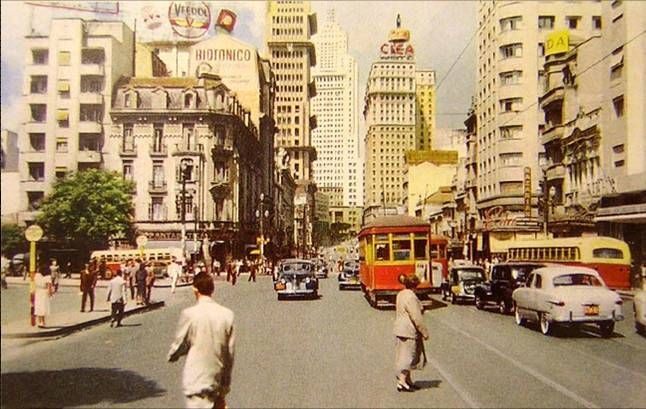
Sao Paolo, 1950s
His children experienced something rather different. The house on Rua Conselheiro Zacharias was large enough to seem enormous to a small boy, full of the strangeness and abundance of tropical life — maids, bananas ripening in the shed, the English club with its careful reconstruction of familiar sociability at equatorial distance — but Ted himself was mostly elsewhere in it, present at mealtimes and occasionally at the club, otherwise absorbed in the work that never entirely stopped. Graham would speak, many decades later, of following his mother to the market to buy freshly roasted coffee, of the steam rising from the enormous sacks, of the richness and strangeness of the life around him, and it is notable that these memories belong to his mother, not his father. Ted was in his office. Jane too recounts playing football with her older brother in the back garden and discovering burglars in the house next door when going to retrieve a lost ball, but does not mention her father.
There is one memory from those years that Graham returns to with something close to joy, and it happened not in Brazil but back in England during a holiday, at his grandmother’s cottage in Helpringham. His father took him and his sister Jane into the fields with an air-sea rescue kite, and got it so high that the children were genuinely, unreservedly thrilled by it. Then the string broke. The kite drifted slowly over the village rooftops, and they followed the trailing line for a long way through the streets before finally finding it. Graham donated the kite and its container to the Devonport museum many years later, which suggests something about what that afternoon meant to him.
Guildford: Stability and its Costs
Ted returned permanently to England in May 1956. A third child, Mark, was born that December. He initially struggled to find work but eventually took a position in Uxbridge, Middlesex and then with Balfour Beatty in London. By 1962 he had built a family home at 16 Semaphore Road in Guildford, and was working for the Central Electricity Generating Board, the state body responsible for almost all electricity generation and high-voltage transmission in England and Wales — moving, over the course of the 1960s, from the Transmission Project Group through to the role of Personal Technical Assistant to the Chief Transmission Engineer at CEGB headquarters in London. He was, by now, a Chartered Engineer, a Member of the Institution of Electrical Engineers, and a Senior Member of the IEEE in the United States, commuting daily to London on the electrified line from Guildford, contributing to the planning and oversight of national infrastructure at a time when the national grid was being steadily expanded and the nuclear programme was under serious development. Ted was in the thick of it at the CEGB Resource Planning Department in the 1970s as strikes and blackouts, culminating in the Three-Day Week, contributed to the downfall of Ted Heath’s government in 1974. He was even in line to take over the running of Battersea Power Station at one point during the unrest.
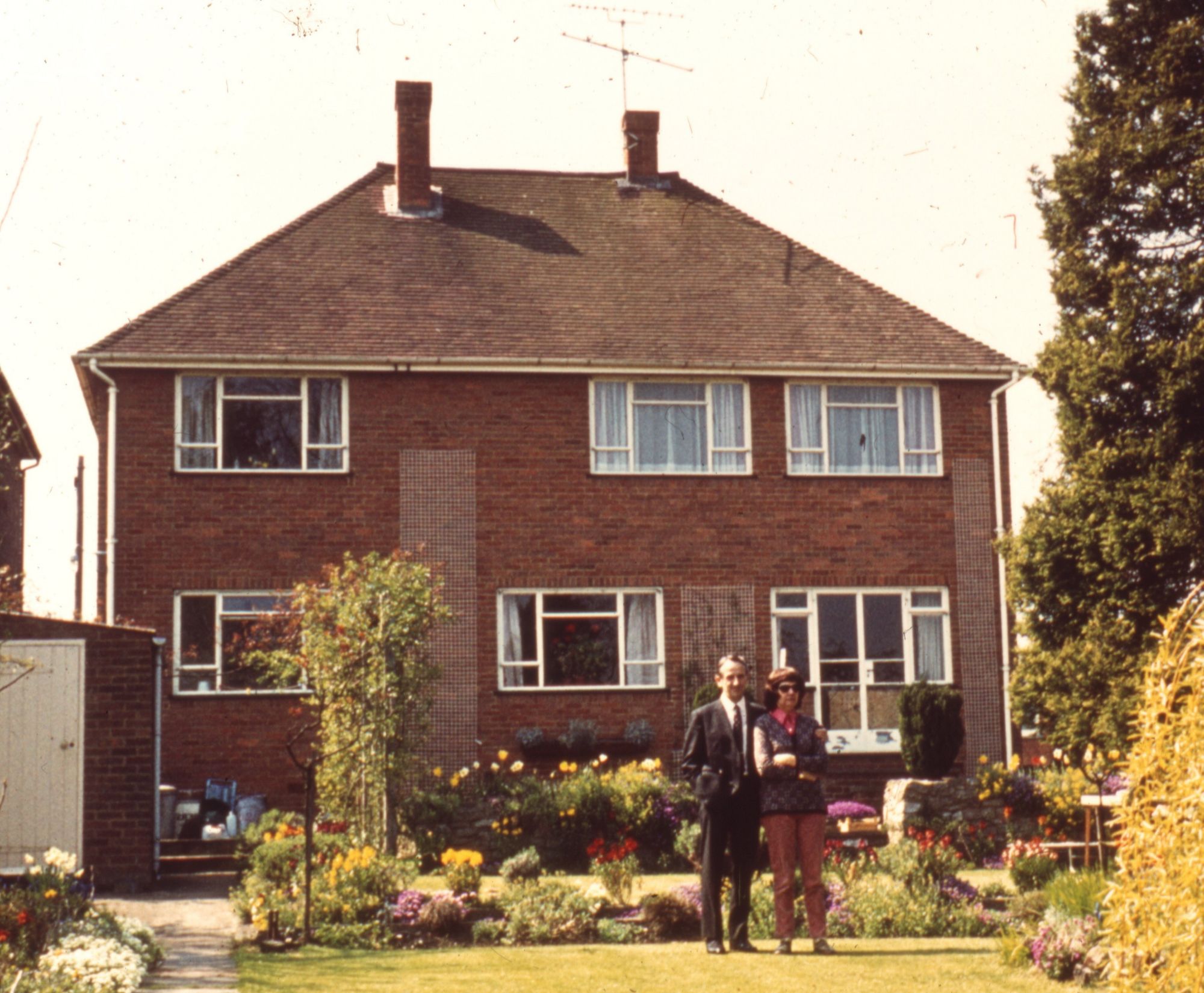
16 Semaphore Road, the house that Ted built
Inside the house, he remained what he had always been — precise, private, emotionally held in reserve. Graham would reflect, in later life, that his father suffered from the same condition he recognised in himself: the tendency to concentrate on earning money for the family while the family quietly needed something else, something harder to produce than income, which was simply more of his time and presence. It is not a bitter observation. It is spoken with the understanding of a man who repeated some of the same patterns before recognising them, and it is offered as explanation rather than verdict. Ted kept certain things in order during those years that would not become fully apparent until after his death (Graham described his mother as a “loose cannon”) — managing, with characteristic quiet efficiency, tensions within the family that required a steady hand and a long patience. The lid held while he was alive.
To add to the pressures at home, his ageing mother had moved in with them in the late 1960s. She lived to the age of 94, finally passing in 1975. Younger brother Ron was rarely mentioned.
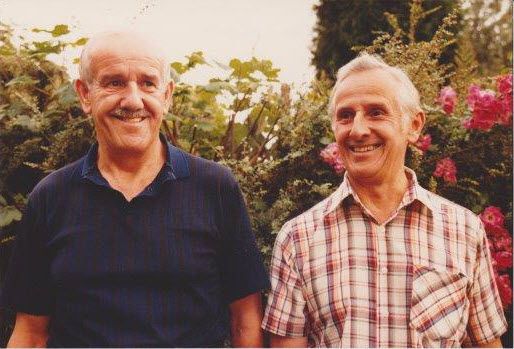
Ron and Ted, distant brothers
New Zealand: The Slackening
In December 1981, Ted and Joan Ball emigrated to New Zealand, following a path their son Graham had taken years before on a moment’s decision in a night-school carpentry class, and which had gradually drawn his parents after him through visits that eventually became permanence. Ted was sixty-four. Daughter Jane was also in New Zealand with husband Tony, a dairy farmer. Mark stayed in England and worked as an airline pilot for British Airways.
In Paeroa, on the North Island, something in Ted loosened, though it would be too strong to say he changed. He pottered in his shed and tended the garden and washed his car with the same perfectionist attention he had always brought to everything. He still bargained with shopkeepers — a habit so deeply inscribed by years of markets and negotiations in Brazil that his family would quietly remove themselves from the shop rather than witness it, unable entirely to suppress their embarrassment. He helped family members with electrical work, arriving with tools and expertise, expressing his love through practical competence, because that was the language he knew best. He was, in all essential respects, still himself.
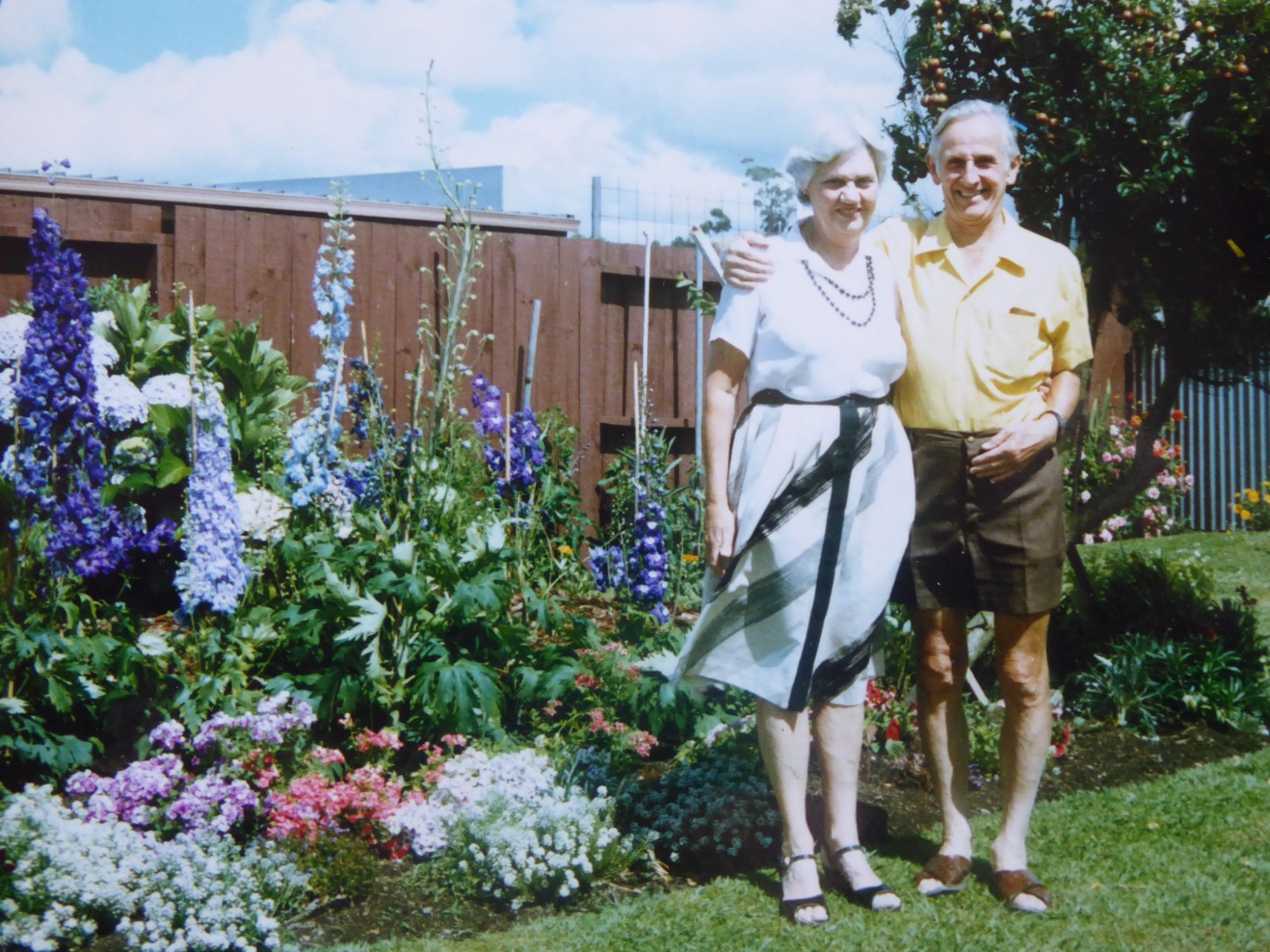
In New Zealand
As Ted’s health declined — he had quadruple bypass surgery in 1992 — Graham came every afternoon to help with showers and medication, and stopped in every morning before work to change his intravenous drugs. He did this for nearly a year. Ted Ball died of prostate cancer on 1 April 1995, at Station Road, Paeroa, having celebrated his fiftieth wedding anniversary with Joan in 1991.
What Remains
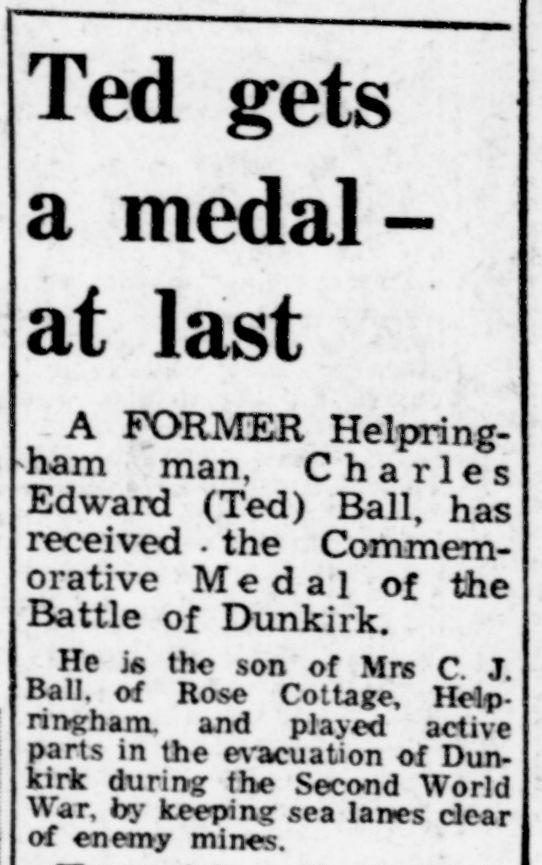
Ted Ball was awarded the Commemorative Medal of the Battle of Dunkirk in 1970, thirty years after the fact. He had been mentioned in despatches. He was a Chartered Engineer with affiliations to two of the most distinguished professional institutions in the world. He had helped manage the power infrastructure of the largest city in South America, kept a hundred minesweepers operational through some of the most dangerous clearance work of the Second World War, and spent the best part of two decades shaping the electricity transmission system of England at a time when that system was being fundamentally remade.
None of this is what his son leads with, when asked to remember him.
What Graham describes is a kite drifting over the rooftops of Helpringham. James Last on the record player. The bargaining in shops that made everyone quietly leave. The shed, the garden, the perfectionism that expressed itself in small domestic rituals. The fact that he was strict, and at times quite loving, and that he was the kind of man whose presence was felt most in the order he imposed on his surroundings rather than in any outpouring of feeling.
“My Father is and always will be my absolute hero.”
That sentence holds admiration and distance and loss and loyalty all at the same time, and it does not resolve them, because they do not resolve. Ted Ball was formed by a century that asked men like him to be competent, reliable, and restrained, and he fulfilled those requirements so completely that the other parts of what he might have been — the man who ran with his children across a Lincolnshire field and got a kite impossibly high — were visible only in glimpses, in the gaps between the work. He gave what he had, and what he had was considerable, and his family felt the shape of what was held back as much as they felt the weight of what was given.
That is not a failure. It is a life conducted according to the deepest assumptions of its time and circumstances, and it mattered, and it is still felt, in the people who carry it forward.
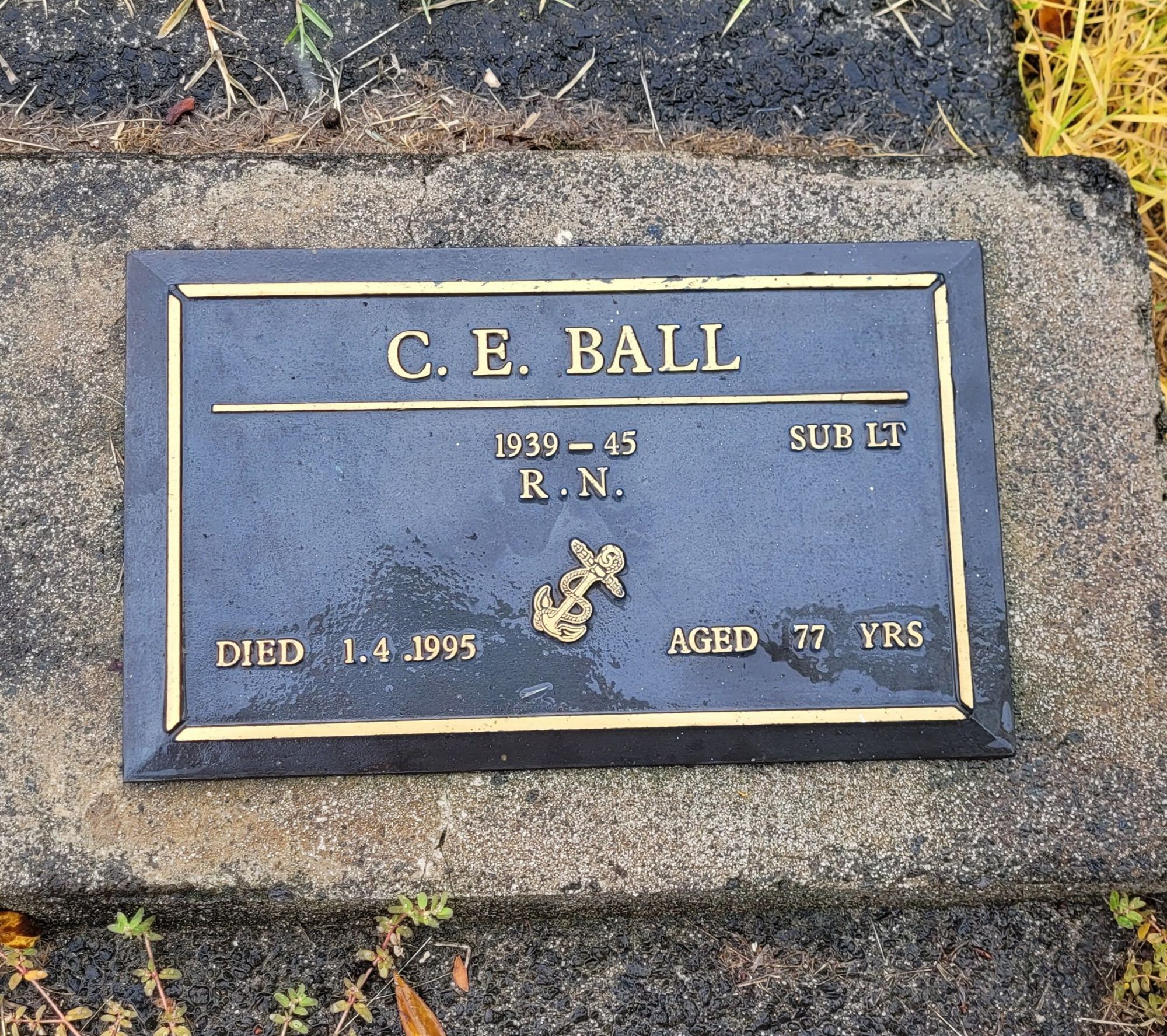
“Death is not extinguishing the light. It is putting out the lamp. Because the dawn has come”
Sources
- Birth of Charles Edward Ball: England and Wales, Register of Births, Rotherham Registration District, 1917, third quarter, vol. 9c, p. 1223; digital image of full register entry, General Register Office (GRO).
- 1921 England Census, Rotherham Registration District, sub-district 2, enumeration district 17, schedule 55, household of Charles Edward Ball (senior); digital image, Ancestry (ancestry.co.uk); citing The National Archives, RG15.
- Death of Charles Ball (senior): England and Wales, Register of Deaths, Sleaford Registration District, 1934, second quarter, vol. 7a, p. 446; GRO certified copy held by Edward Ball.
- England and Wales Register, 1939, East Kesteven Registration District, RD 416/1, enumeration district TJAG, schedule 95, sub-schedule 3, entry for Clara Ball and Charles Edward Ball; digital image, Ancestry (ancestry.co.uk); citing The National Archives, RG101.
- Charles Edward Ball, curriculum vitae, 19 October 1977; digital copy held by Edward Ball, original privately held by Graham Charles Ball, Paeroa, New Zealand. Cited for apprenticeship 1934–1938, subsequent appointments, qualifications, and career chronology throughout.
- “Staying Afloat: Charles Ball — From Apprentice Electrician to Sub-Lieutenant in the Royal Navy Keeping the Sea Lanes Clear,” published interview, interviewer and publication unidentified; digital copy held by Edward Ball, original privately held by Graham Charles Ball, Paeroa, New Zealand. Cited for Ted Ball’s own words regarding naval service, Dunkirk, and post-war career.
- “Helpringham,” Sleaford Gazette, 3 July 1936, p. 2, col. 7; digital image, Findmypast (findmypast.co.uk).
- “Mainly About People,” Stamford Mercury, 3 September 1948, p. 4, col. 4; digital image, Findmypast (findmypast.co.uk).
- London Gazette, 3 September 1940, vol. 34938, p. 5385, entry for Probationary Temporary Sub-Lieutenant Charles Edward Ball, RNVR; digital image, Ancestry (ancestry.co.uk). Cited for mention in despatches, Dunkirk.
- Marriage of Charles Edward Ball and Joan Margaret Bowles: England and Wales, Register of Marriages, Sheppey Registration District, 1941, second quarter, vol. 2a, p. 3945; GRO certified copy held by Edward Ball.
- Electoral Register, Bedfordshire, 1946, Leighton Buzzard division, entry for Charles Edward Ball; digital image, Ancestry (ancestry.co.uk). Cited for residence in Leighton Buzzard during appointment at Luton Corporation Electricity Department, 1946–1948.
- Electoral Register, Middlesex, 1958, Uxbridge North division, Ickenham ward, entry for Charles Edward Ball; digital image, Ancestry (ancestry.co.uk). Cited for residence in Ickenham following return from Brazil.
- Electoral Register, Middlesex, 1962, Uxbridge North division, Ickenham ward, entry for Charles Edward Ball; digital image, Ancestry (ancestry.co.uk). Cited for continued residence in Ickenham prior to move to Guildford.
- Telephone Directory, Guildford and district, 1962, entry for C. E. Ball, 16 Semaphore Road, Guildford; digital image, Ancestry (ancestry.co.uk). Cited for establishment of family home at Semaphore Road by 1962.
- Telephone Directory, Guildford and district, 1981, entry for C. E. Ball, 16 Semaphore Road, Guildford; digital image, Ancestry (ancestry.co.uk). Cited for continued residence at Semaphore Road to the point of emigration.
- “Ted Gets a Medal — at Last,” Sleaford Standard, 7 July 1972, p. 3, col. 3; digital image, Findmypast (findmypast.co.uk). Cited for award of the Commemorative Medal of the Battle of Dunkirk 1940.
- Electoral Register, Paeroa, Coromandel electorate, 1987, entry for Charles Edward Ball; digital image, Ancestry (ancestry.co.uk). Cited for residence at Paeroa, New Zealand.
- Death of Charles Edward Ball: New Zealand, Death Registration, Thames district, folio no. 012329; digital image held by Edward Ball. Cited for date of death 1 April 1995 and place of death Paeroa.
- Graham Charles Ball, Paeroa, New Zealand, to Edward Ball, England, email correspondence, 28 January–3 February 2026; originals held by Edward Ball. Cited for family recollections of Brazil, Guildford, and New Zealand, including the kite, the LPs, the bargaining in shops, and Graham’s care of Ted during his final year.
 We Are The Balls