Driven to distraction

My grandma never knew her husband Les’ maternal grandfather and all she could tell me about him was that he owned several lorries in Farnsfield, Nottinghamshire and that he was an alcoholic. “I don’t even know what it was that he drunk”, she said. “It’s usually spirits, isn’t it? But I’ve no idea.”

“The alcoholic”, as my mum referred to him, was called Sam Palmer (although that wasn’t his birth name) and he died from liver cirrhosis[1], a tell-tale sign of alcohol abuse, in May 1944, a few weeks before the Allied troops landed on the beaches of Normandy. Alcoholism is usually caused by a combination of societal and family factors, and can be triggered by stressful events[2]. The life of Samuel Palmer (1882-1944) provides an unfortunate case study of how circumstances, often outside of our control, can play a crucial, and sometimes damaging, part in our mental health.
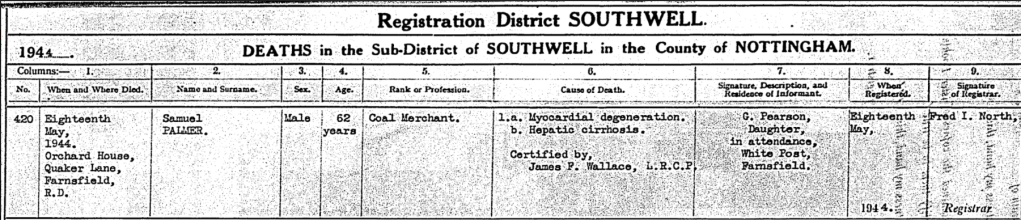
Registration of Samuel Palmer’s death

To appreciate the full story we need to go back to the year before Sam was born. In 1881, 50-year-old framework knitter Samuel Hallam was living with his 23-year-old housekeeper Elizabeth on a row of knitter’s cottages in the large, straggling village of Woodborough, 8 miles north-east of Nottingham[3]. His wife Jane had died 8 years previously[4], and the young Elizabeth, daughter of Hallam’s friend Thomas Palmer was an attractive prospect for the aging widower. They started a relationship and had a daughter Rebecca, out of wedlock, followed by a son Samuel who died after only a few weeks[5]. Their third illegitimate child, another son and our subject, born in February of 1882, was also baptised Samuel Hallam[6] although he would later opt for his mother’s surname.

Over the first 10 years of young Sam’s life, he and his elder sister Rebecca suffered considerable trauma. They saw two more sisters die as babies[7] and although a brother, Harry, would survive, by 1891 their father was ill and unable to work to support the family. Things got so bad that the three children, along with their ailing father, ended up in Basford workhouse, while their mother went to stay with her sister’s family[8].

Although the children received some schooling while they were in the workhouse, and were taken on occasional outings (including a trip to Skegness[9]), they were separated from their parents (and probably each other) and must have been scared and lonely as they first tried to sleep at night in the cramped dormitories. Flogging of young boys for minor infractions was common practice in some workhouses of the time, as were reports of systematic child abuse by depraved nurses[10]. To make matters worse their father died during their time inside[11], leaving the Palmer children (as they were now known) with only each other for comfort. A Poor Law Commissioner inspecting Basford in 1891 did consider the conditions there satisfactory and reported “favourably of the food and treatment, but made suggestions with regard to bathing and amusements”[12], so perhaps Sam was relatively well looked after, albeit a little bored and grubby. Some workhouses gave the boys half a pint of beer with their dinner and supper each day[13], so maybe this was where Sam first got a taste for it.

When Sam got out of the workhouse (possibly aged 14 when he was deemed old enough to enter employment) he worked first as a wagoner[14], driving horses on a farm, and later moved into the city to work in one of the many coal mines[15]. It was here that he met Nelly Davis, a lace mender from Bulwell, and they married in 1905[16] when Nelly was several months pregnant with their first child (a daughter, Gladys). Life seemed to be improving for Sam as they lived first with Nelly’s family and then moved into a small house of their own on the same street.

In 1913 however, tragedy struck. Nelly’s father Joseph, also a coal miner, whom Sam knew well and perhaps worked with, was killed in an accident late at night in the pit. Despite being an experienced collier, and all necessary precautions being taken, a part of the roof had fallen on him while he reached underneath[17]. Nelly and her mother must have been devastated, and Sam too who would have to keep going down into the depths to work with the thoughts of what happened to Joseph surely playing on his mind.
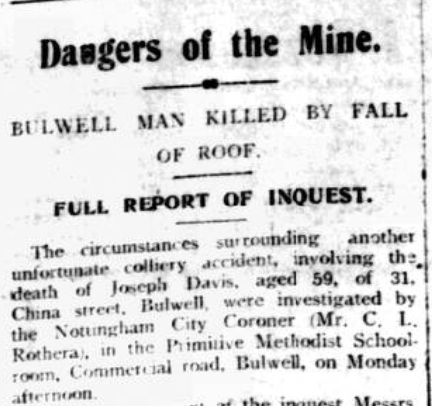
Report of the inquest into Joseph Davis’ death, Beeston Gazette and Echo, 1 Nov 1913.
Newspaper image © The British Library Board. All rights reserved. With thanks to The British Newspaper Archive (www.britishnewspaperarchive.co.uk)

Perhaps not surprising then that Sam and Nelly, who now had a second daughter, left the city shortly after. Sam got a job at Rufford Colliery, and the family looked to be moving on from their loss as they moved into a nice cottage with a large garden in Farnsfield called Orchard House and were further blessed with a son[18].
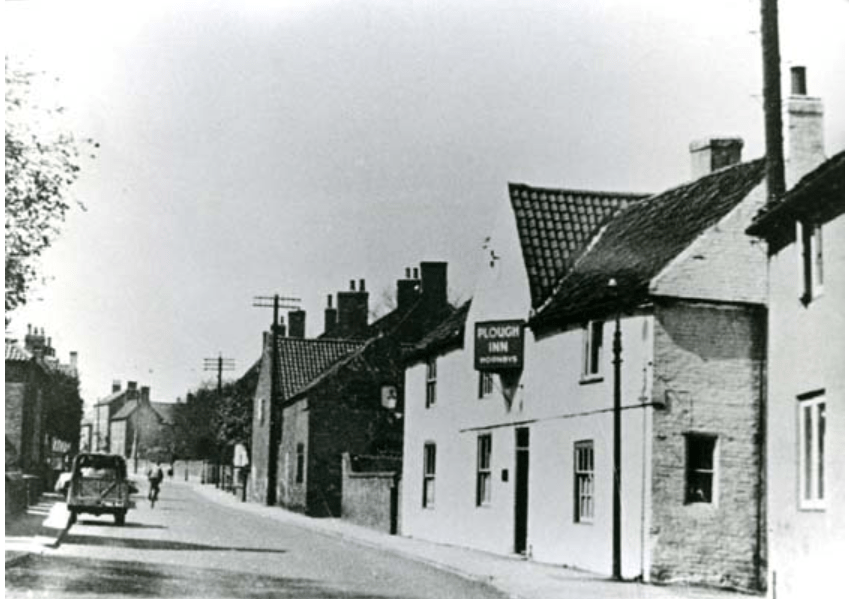
The Plough Inn, Farnsfield where Sam spent many a merry evening

Around this time, Sam was making friends in the local community, playing cricket[19] and becoming the president of the ‘Farnsfield and Edingley Pig Club’. At the club’s annual dinner at the Plough Inn in March 1924, Sam was in charge of proceedings and contributed to the general merriment with songs and poetry recitals[20]. Later that same week, daughter Nelly and son Samuel Gilbert (known as ‘Sonny’) were receiving prizes at the church schoolroom. The packed audience, no doubt including a very proud Sam and Nelly, watched the children perform sketches from Peter Pan, Alice in Wonderland and a Midsummer Night’s Dream[21]. With financial help from his brother Harry, Sam was also able to give up mining and start his own business as a haulier[22], taking advantage of the growing need for heavy goods transportation in the post-war housing boom[23].
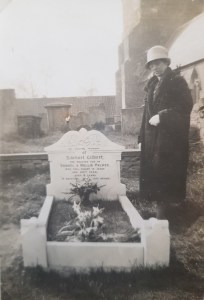
The grave of Samuel Gilbert ‘Sonny’ Palmer

As with the rest of Sam’s life though, misfortune was never far away. In January 1926, their only son Sonny, who had suffered for a long time with a spinal complaint, took ill and died a few days later[24]. He was just 9 years old. If Sam had managed to keep a lid on his drinking until then, was this the moment that everything became too much? It must have been unbearable, sitting in the cold church, seeing the sprays of flowers sent by Sonny’s schoolmates, trying to stay strong for Nelly and the girls.

Sam was a keen gardener, and in the months and years that followed Sonny’s death, he won many prizes for his fruit and vegetables at local horticultural shows (at one he was commended for his “exceptional” onions)[25]. His young daughter Nelly also had success growing wildflowers – working outside together at Orchard House and tending to their garden perhaps gave them all some solace in trying times. He continued to work as a haulage contractor[26] and play cricket for Hargreave Park on summer weekends.

Evidently Sam continued to struggle with his drinking however, and there must surely have been occasions when he was driving on the roads around Farnsfield with a mind clouded by ale, or something stronger. Although there was no legal drink driving limit until 1967, Sam could still have lost his license for 12 months, or even been sent to prison, for being caught drunk in charge of a vehicle[27]. The consequences for his business would have been disastrous.

So although Sam may have seemed like the life of the party when he was singing songs into the night at cricket club suppers at the Plough[28], underneath he never quite escaped his troubled upbringing and a life punctuated by tragedy. He died aged 62 on May 18th 1944 when his heart finally gave in[29].
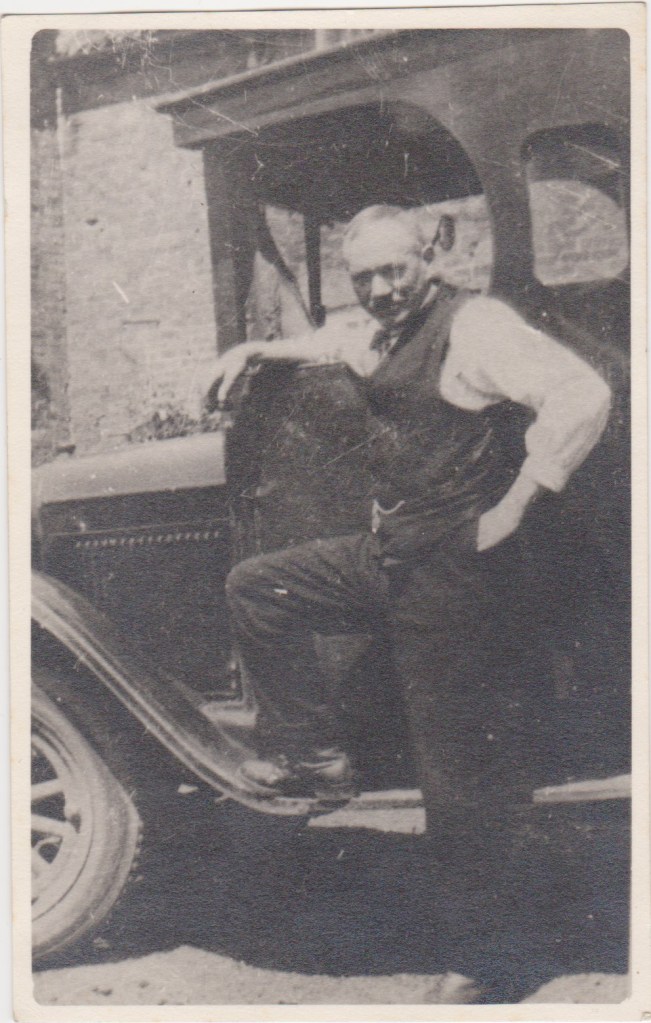
Sam Palmer with one of his lorries

References


[1] Death certificate of Samuel Palmer
[2] Alcohol dependence and withdrawal, drinkaware, https://www.drinkaware.co.uk/facts/health-effects-of-alcohol/mental-health/alcohol-dependence
[3] 1881 Census of England & Wales
[4] England & Wales, Civil Registration Death Index, 1837-1915
[5] Nottinghamshire Baptisms, Nottinghamshire Family History Society
[6] ibid.
[7] ibid.
[8] 1891 Census of England & Wales
[9] Nottingham Evening Post, 14 July 1891
[10] Higginbotham, Peter “Children in the Workhouse”, https://www.workhouses.org.uk/education/
[11] England & Wales, FreeBMD Death Index: 1837-1915
[12] Hucknall Morning Star & Advertiser, 4 December 1891
[13] Higginbotham, Peter “Workhouse Food”, https://www.workhouses.org.uk/life/food/
[14] 1901 Census of England & Wales
[15] 1911 Census of England & Wales
[16] Marriage certificate of Samuel Palmer & Nelly Davis
[17] Beeston Gazette & Echo, 1 November 1913
[18] 1921 Census of England & Wales
[19] Newark Herald, various reports from 1922 to 1929
[20] Newark Herald, 8 March 1924
[21] ibid.
[22] Correspondence with Sue Palmer, 2011
[23] The history of haulage and road transport in the UK, https://www.snapacc.com/blog/0021-The-history-of-haulage-and-road-transport-in-the-UK/
[24] Newark Herald, 30 Jan 1926
[25] Newark Herald, various reports from 1925 to 1929
[26] Marriage certificate of Gladys Palmer and Alfred Pearson
[27] A History of Drink Driving & Motoring Laws in the UK, https://www.drinkdriving.org/drink_driving_information_uklawhistory.php
[28] Newark Herald, 2 November 1929
[29] Death certificate of Samuel Palmer
An unlikely traveller

Archibald McLean (1830-1915) lived within a few miles of his birthplace for over 70 years and did the same job as his father and grandfather before him. Strange then, you might think, that he should end his life over 3000 miles away in the Appalachian mountains of America.

Born in the Dunfermline area of Fife, Scotland in the winter of 1830, Archibald was the 7th child of Thomas and Gomry McLean[1]. They lived in the small mining village of Lochgelly with 4 daughters and a son, having lost another son also called Archibald in recent years. Lochgelly consisted of only a few scattered houses, mostly thatched, and was a pleasant place, quiet except for the clatter of a handloom[2].

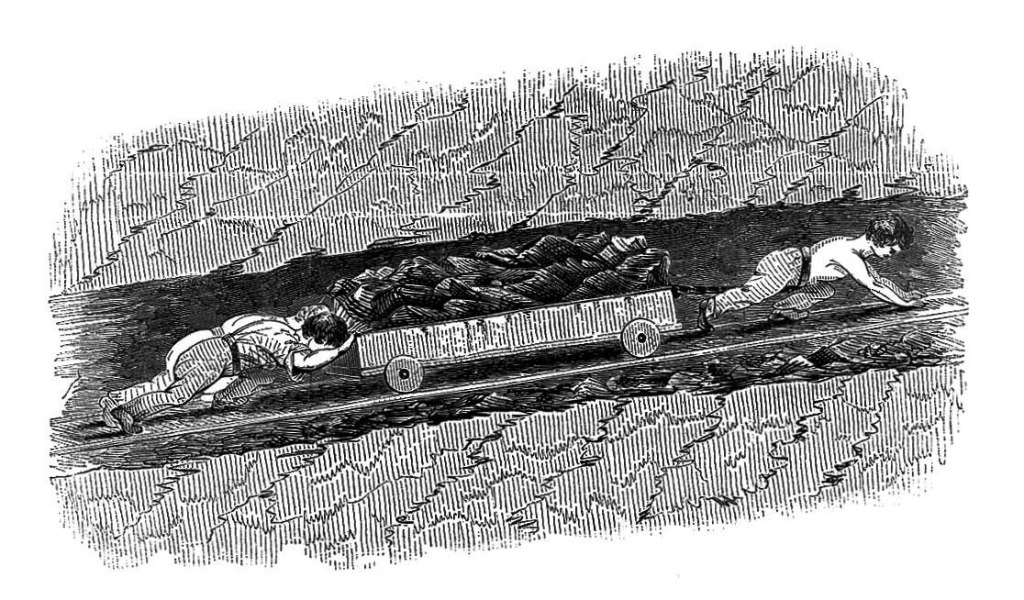
His father, Thomas, was a coal miner, as the McLean’s had been for generations before, and by the time he was 10, Archibald and his older brother Alexander were accompanying him down the mine for up to 12 hours a day. They would work together in near darkness, probably naked due to the heat, ‘howking’ coal out with pickaxes which their sisters Christina and Montgomerie would then pull on heavy carts through low tunnels up to the surface[3]. Unlike in the west of Scotland, where up to half of the workforce were Irish immigrants, the coalfields around Fife were still mainly worked by traditional Scottish mining families like the McLeans and there would have been little question that Thomas’ sons followed him into the pits, possibly starting work as young as 6 years of age[4].

Children hauling coal up the slope of a mine; from an engraving of the 1840s

Mines in this period were cramped, poorly ventilated and highly dangerous with accidents and deaths commonplace – the most frequent causes being roof falls and gas explosions[5]. An 1842 investigation into child labour in some of the collieries in the area reported numerous injuries to children including a 12-year old Mary McLean (possibly a cousin of Archibald) whose legs were crushed by a 300kg coal cart[6].

The railway arrived in Lochgelly in 1849, which marked the start of a dramatic period of expansion, with many more pits opening up in and around town[7]. The McLean family had moved to the nearby village of Crossgates by 1851, with Archibald (now 20) still mining with his father (61) and his younger brother Thomas (18)[8]. His younger sisters, Helen, Elizabeth and Grace were spared the gruelling work and were able to stay at home with their mother since legal reforms had outlawed women from working in the mines a few years earlier. They were likely living in housing rented from one of the large coal companies operating in the area, which were often low-ceilinged, badly lit and damp, sometimes with the stench of open drains not far from the door[9].

In January of 1852, aged 22, Archibald married Jessie Thomson, the daughter of a miner from a poor family in Milesmark[10], around 6 miles away on the other side of Dunfermline. They moved in together in her home village, which was small with only a handful of cottages and collier’s houses, a school and a pub[11]. Over the next 13 years they had 7 children together until Jessie sadly died of heart disease at the age of 38 in 1866, 2 months after giving birth to their 4th son[12].

Archibald remarried later that year to Rachel Sneddon, who herself had been widowed and they lived together on Cottage Row in Milesmark for 36 years, having 2 further children together[13].

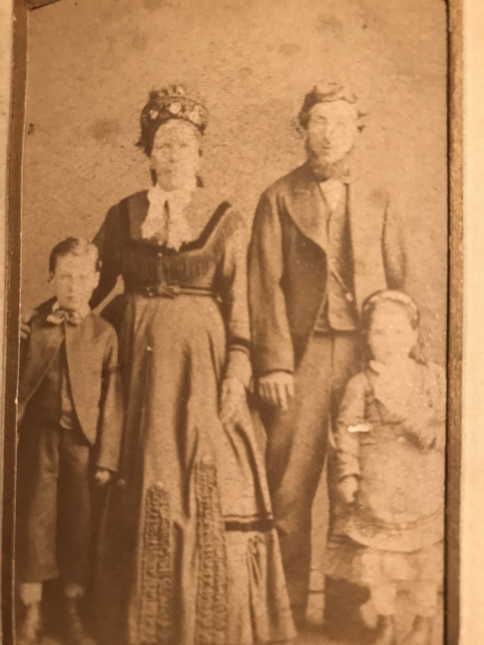
Archibald and Rachel with their 2 children, c. 1876

A newspaper correspondent, writing in 1875, described Cottage Row thus:

“[The houses] are uniform in style and internal arrangement – large rooms and kitchens, with lofty ceilings, lumpy stone floors, and ample window space on both sides … They are very well furnished, several of the rooms having tester beds with damask curtains, engravings on the walls, and on the tables family Bibles and other books, showing that the people do not belong to the lower class of miners.”

The Old “Fitpaths” and Streets of Dunfermline (Dunfermline Journal 27 Feb 1875)

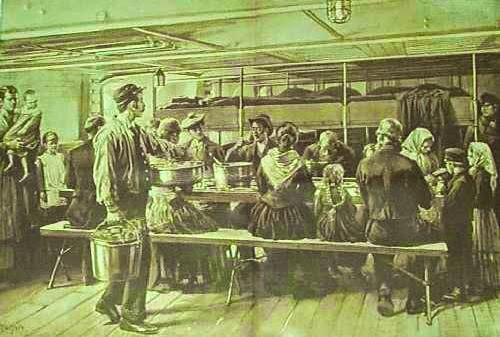
It would seem as if Archibald’s skill and experience in the mines had allowed him to provide a reasonable standard of living for him and his family. The same perhaps could not be said though for two of his young sons-in-law, Thomas Beveridge and William Hynd, who had married his daughters Montgomery and Maggie respectively. They were also both coal miners but during the severe economic depression of the 1880s they had begun to look further afield for better opportunities. The decisive move came in 1886 when Beveridge packed up and made his way to Glasgow to board a transatlantic steamer bound for Philadelphia[14]. He, like thousands of others from across Europe, had been enticed to start a new life in America with the promise of land to farm. First though he would have to survive the wretched conditions as a ‘steerage’ passenger below deck where the minimal space, insufficient food, general filth and stench made the voyage “almost unendurable”[15]. Not the ideal beginning to a new dream life.

Passengers eating in steerage, 1890

Unperturbed by (or perhaps unaware of) the journey to come, Montgomery followed a few months later with their 4 children[16] and it wasn’t long before Maggie and William Hynd were also travelling over to visit them[17] and see what life was like in the hills of Clearfield County, Pennsylvania, 250 miles west of New York. The Hynds returned to Dunfermline after a year, with a new baby Archibald in tow[18], no doubt excited to introduce him to his grandfather and tell the old man all about their adventure.

Archibald meanwhile continued doing what he knew best, working down the mine, perhaps at the extensive Elgin and Wellwood Colliery near Milesmark, and when he finally retired he had worked in the pits around Dunfermline for more than 50 years. The work had changed dramatically in that time from a small family group toiling with hand tools, to a more industrial, mechanised operation, albeit still with a multitude of dangers for the colliers.

When his second wife Rachel died in 1902 at the age of 75[19], Archibald moved in briefly with his son Archibald Jr and his family, but reportedly did not get on well with his daughter-in-law[20]. It was thus in 1904 that he decided to leave behind all that was familiar and go with Maggie and her children as they set off back to Pennsylvania to join William, who had returned, this time permanently, the year before. This couldn’t have been an easy decision for Archibald and it perhaps took much persuasion from Maggie for him to go with her.

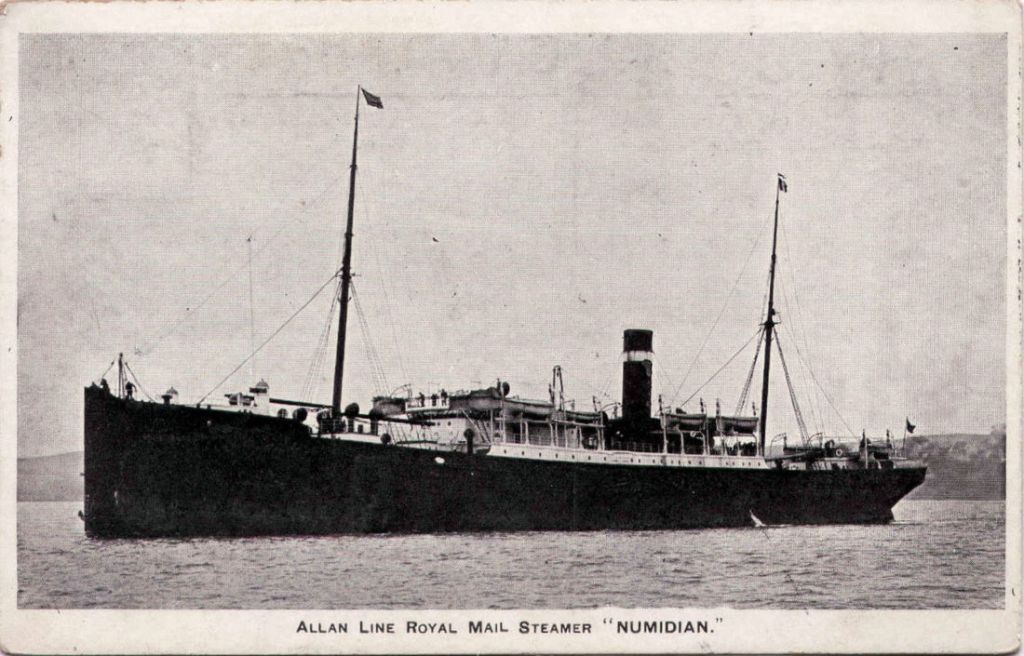
After saying a no doubt tearful goodbye to his family in Fife, the elderly Archibald made the 16-day trip from Glasgow to New York on the steamship the “SS Numidian”, travelling in second-class accommodation[21]. This would have been relative luxury compared to those on the lower steerage decks, although sailing across the stormy north Atlantic in February may still have been stomach-churning for the inexperienced traveller.

The steam ship which took Archibald to America in 1904

There must have been great scenes when Montgomery was reunited with her father after nearly 20 years in the States, and any misgivings he had about his new home may have been tempered by the familiar sight of coalfields dotting the Pennsylvanian landscape.

Having arrived safely in Clearfield County, Archibald lived there on the farm, amongst an extended family, until he died of heart failure on 27 Feb 1915 at the age of 85[22]. He was buried in Summit Hill Cemetery and was described in his obituary as “a Christian gentleman with a kind and gentle disposition that made him respected wherever known”[23]. He died a grandfather of 35 and great grandfather of 18.

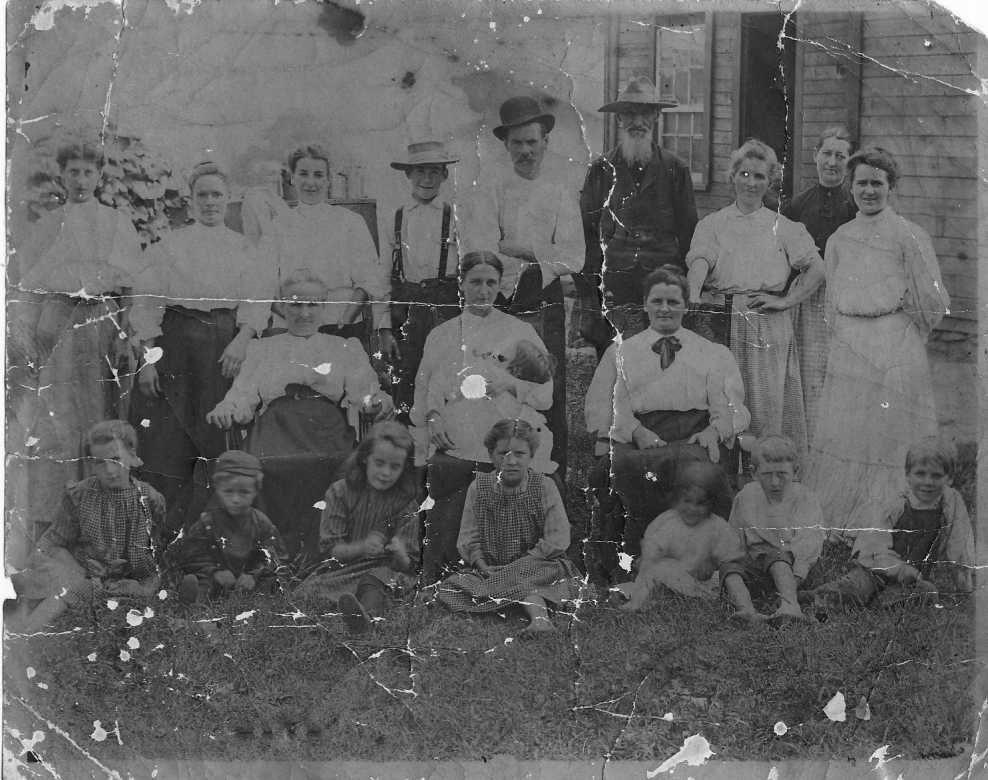
Archibald (back row with the white beard), with the Hynds and Beveridges in America

References


[1] Old Parish Registers Births, Dunfermline
[2] “Bygone Life in Lochgelly: Stray Memories of an Old Miner”, http://www.fifepits.co.uk/starter/stories/stor_4.htm
[3] 1841 census of Scotland
[4] The Mineworkers, Robert Duncan, Birlinn 2005
[5] ibid.
[6] Collieries in the Western District of Fife, Childrens Employment Commission 1842, http://www.scottishmining.co.uk/89.html
[7] Lochgelly Feature Page on Undiscovered Scotland, https://www.undiscoveredscotland.co.uk/cowdenbeath/lochgelly/index.html
[8] 1851 census of Scotland
[9] Notes on Miners’ Houses Part XII, http://www.scottishmining.co.uk/413.html
[10] Old Parish Registers Marriages, Dunfermline
[11] Fife and Kinross-shire OS Name Books, 1853-1855, https://scotlandsplaces.gov.uk/digital-volumes/ordnance-survey-name-books/fife-and-kinross-shire-os-name-books-1853-1855/fife-and-kinross-shire-volume-128/71
[12] Scotland Statutory Death register
[13] Censuses of Scotland, 1871-1901
[14] Pennsylvania, U.S., Arriving Passenger and Crew Lists, 1800-1962
[15] “Steerage Conditions,” in Reports of the Immigration Commission, Volume 37. 1911.
[16] New York, U.S., Arriving Passenger and Crew Lists (including Castle Garden and Ellis Island), 1820-1957
[17] Pennsylvania, Philadelphia Passenger Lists, 1800-1948
[18] UK Incoming Passenger Lists, 1878-1960
[19] Scotland Statutory Register Deaths Index, 1855-1956
[20] Recording of conversation with Mary Maclean, c.1978
[21] New York, U.S., Arriving Passenger and Crew Lists (including Castle Garden and Ellis Island), 1820-1957
[22] Death certificate of Archibald McLean
[23] Obituary of Archibald McLain (sic)

The dancing widow

Back to my mother’s side of the family again this time and I wanted to focus on the experience of a woman as so much of the information I have found during my family history research is about the men. The woman in question is Mary Jane Clifford, née Ballantyne (1870-1952), my maternal grandmother’s grandmother, who was widowed in a very distressing way but got through with the help of her family.

Mary Jane Ballantyne was born on 22 June 1870 in the Scottish border town of Langholm, in Dumfriesshire[1]. The second child of John and Janet Ballantyne, her father was a skilled tailor in the booming textile industry[2]. The family moved across the border to England when Mary was 4 or 5 and by 1881 she was one of 6 children at their home on Edward Street in Bishop Auckland, Durham[3]. Her parents went on to have 6 more children, an example which Mary would later follow with a large family of her own.

Her first child was a daughter, Nellie, born in 1890 when Mary was 19 and unmarried[4]. She was followed 3 years later by another daughter, Jessie[5], before Mary married Granville Clifford, a brickworks labourer, when she was 26[6]. They lived together initially on Edward Street, just down the road from the Ballantyne family[7], and later moved to a slightly larger property on Durham Chare, a steep and narrow road leading down to the river[8].

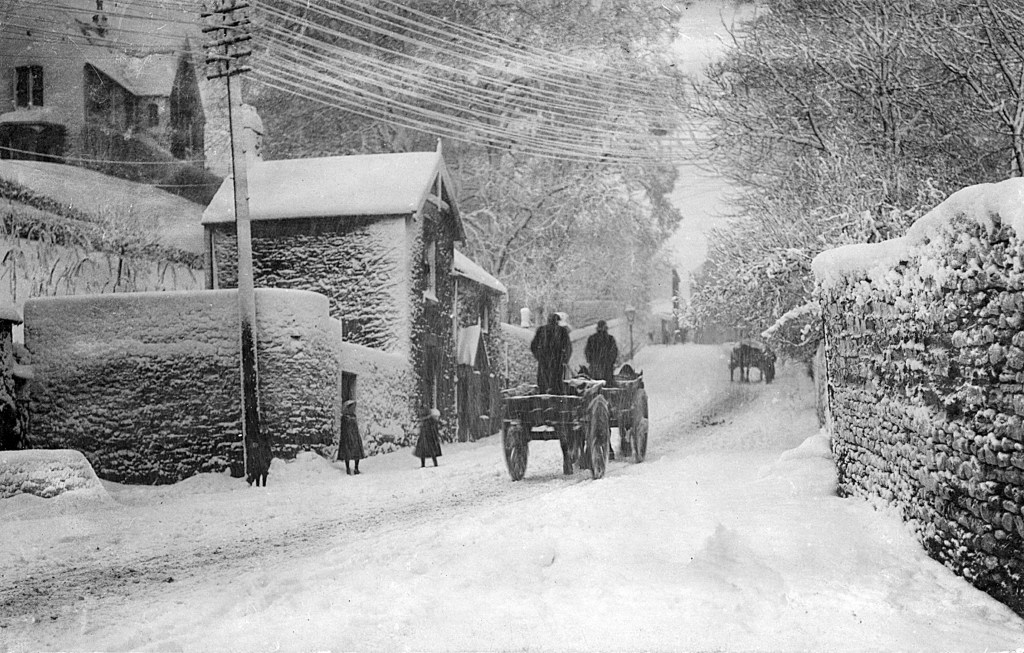
Durham Chare in the snow, c1910

Mary had seven children with Granville over the next 14 years and her life would likely have been one of domestic drudgery as her husband was out working and she cooked, cleaned and cared for all the little ones. At least her parents and many brothers and sisters were close by to help out and provide some escape. One can imagine the relief as each child reached 5 years of age and was required to start school, or maybe Mary would have preferred them to go to work and bring in some much needed extra money for the family.

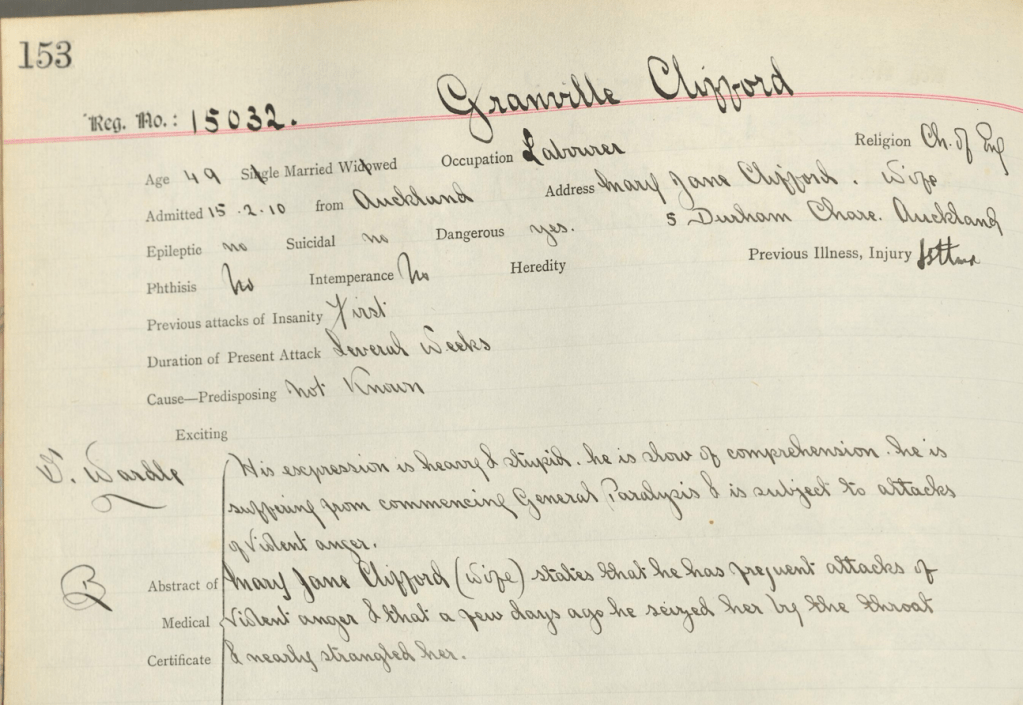
By February 1910, at the age of 39, Mary was giving birth to her 10th and final child[9]. But her husband’s behaviour was becoming erratic and sometimes violent. Within a few weeks, Granville’s mental state deteriorated rapidly and his anger worsened, at one point seizing Mary by the throat and nearly strangling her[10]. She must have been terrified and confused by this sudden change and desperate to protect herself, her new-born baby and her older children. She must also have feared for Granville and the family’s future as she admitted him to the Durham County Asylum in nearby Sedgefield for treatment, his expression dull and his tongue stuck out and quivering[11]. She must have known that his diagnosis meant it was highly unlikely that Granville would recover.

Extract from Durham Asylum casebook

Mary was left at home in the small cottage in Bishop Auckland with 8 children to look after, and must have struggled through the following days and weeks, keeping her family together by day and lying alone with worry at night. When their father passed away 8 months later[12], Mary told the children that he had died in a railway accident[13]. Did she really believe his illness had been caused by a blow to the head at work or was she covering the embarrassing truth that he had succumbed to “general paralysis”, a condition that had recently been linked to untreated syphilis?

Times got harder for Mary in the years that followed, and she initially made ends meet by doing laundry work from home while her daughter Jessie earned money as a machinist in the local lithographic works[14]. Despite her diminutive size – she was under five foot and wore a size 2 shoe – Mary showed great strength and resilience to survive as a single working parent and she later found work cleaning the local newspaper offices and theatres, with help from her daughter Beth[15]. In 1921, Mary’s house was home to 8 other family members, some working and some helping at home, so although life was a struggle and they were all crammed in to only 3 or 4 bedrooms, she was always surrounded by loved ones[16].

As her children started families of their own and finally all left home, Mary lived out her days in ‘Bishop’ and enjoyed Scottish dancing and month-long visits from her grandchildren in the summer holidays[17].

She died aged 82 on 27 Nov 1952 from liver cancer[18], leaving behind 9 children and at least 11 grandchildren. Mary’s life was turned upside down by her husband’s sudden and shocking demise, but her spirit was undimmed and she never stopped dancing.

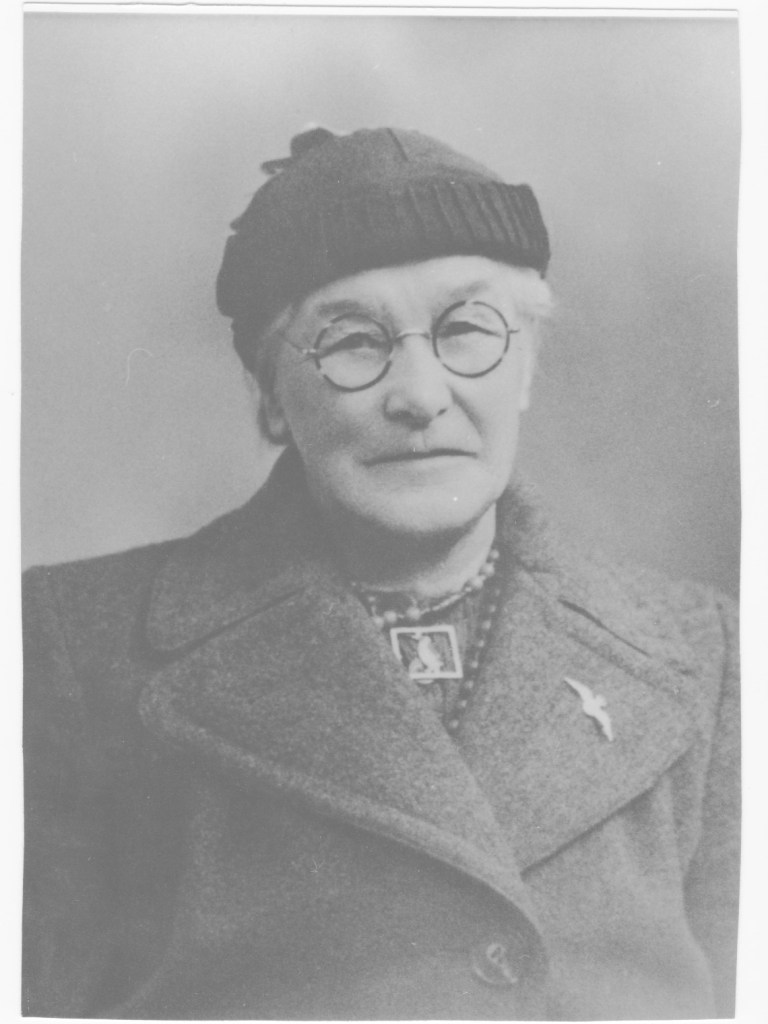
Mary Clifford

References


[1] Scotland, Select Births and Baptisms, 1564-1950, Ancestry.co.uk
[2] 1871 Scotland census
[3] 1881 census of England & Wales
[4] 1901 census of England & Wales
[5] ibid.
[6] England & Wales Marriage index
[7] 1901 census of England & Wales
[8] 1911 census of England & Wales
[9] ibid.
[10] Winterton hospital casebooks, admission number 15032
[11] ibid.
[12] Death certificate of Granville Clifford
[13] Recording of conversation with Mary Pearson, 2010
[14] 1911 census of England & Wales
[15] Recording of conversation with Mary Pearson, 2010
[16] 1921 census of England & Wales
[17] Recording of conversation with Mary Pearson, 2010
[18] Death register entry for Mary Jane Clifford