Working-class boy made good

My next subject is on my father’s side of the family and is the first in our history to be born with the name ‘Ball’ (more on that another time). His story is one of a working class Yorkshireman whose determination and astute business sense brought financial success. But ultimately it was his job that killed him.

Charles Edward Ball (1875-1934) was born in Attercliffe in the “East End” of Sheffield, the eldest child of a railway worker and his teenage wife[1]. Attercliffe was the largest area of Sheffield at the time, owing to the extensive manufacturing industry which had built up around the nearby railway and canal, and was at the heart of the city’s Industrial Revolution[2]. One writer described the area at the time as “masses of buildings, from the tops of which issue fire, and smoke, and steam, which cloud the whole scene, however bright the sunshine.”[3]
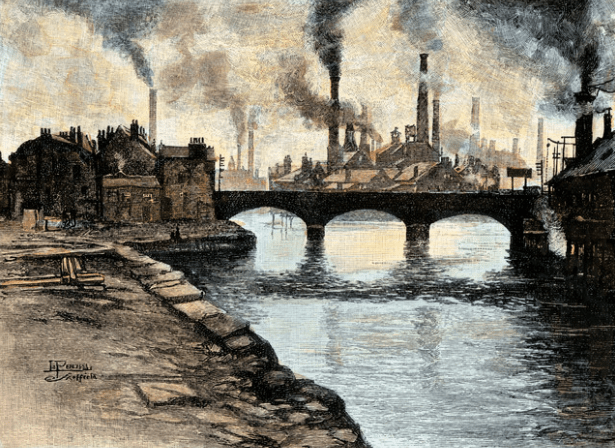
Sheffield factories in the 1800s

As a young man Charles looked set to follow his father into manual labour and worked first as an apprentice wagon wheel maker, aged 15[4], and later as an iron worker[5]. This was hard physical work but Charles was in good shape. He competed in foot races, specialising in the quarter and half mile distances, and in his peak was beating the local competition and running the 440-yard dash in around 52 seconds (only a few seconds off world record pace)[6]. Sheffield was world-renowned for athletics in the Victorian era and these races were prestigious affairs with a large number of entrants, thousands of spectators and prize money up to £10 per race, which would have equated to around a month’s wages for Charles at the time[7].

One can imagine Charles being careful with his money and perhaps saving his winnings for a rainy day, as although metalworking was a skilled job, employment was inconsistent and wages often varied on a sliding scale linked to the prevailing market prices for iron and steel[8].

A turning point in Charles’ life came in his mid-twenties when he met a young ostler’s daughter by the name of Emily Moore. Emily was living with her grandfather, George Carr Jessop, in Rotherham at the turn of the century[9]. Jessop was a seed and corn merchant and had previously been a grocer in Attercliffe and a Baptist deacon[10]. Charles fell for Emily and they married in October 1901[11], at which point he decided to pursue a more stable living, perhaps with the influence of Jessop who was protective of his granddaughter.

He took up work at the seed shop and became a partner with the aging Jessop. By 1904 the shop was named ‘Jessop & Ball’ and was situated between a hosiers and a paint & wallpaper seller within the Market Hall in Rotherham[12]. They sold all manner of seeds for bird food, gardens and flowers, as well as other products such as dog food[13]. They also sponsored local pigeon racing[14] and Charles showed his competitive nature again by winning prizes for his poultry in the “Fur and Feather Fanciers” show[15].
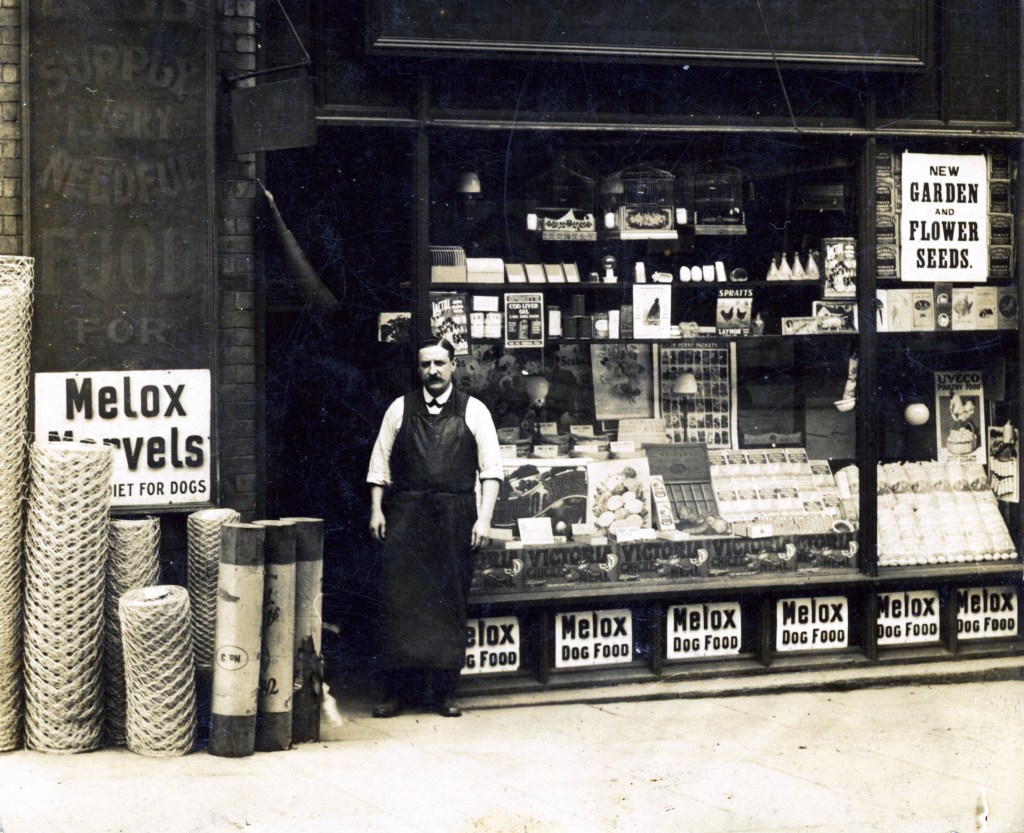
Charles in front of his seed shop, Rotherham

Charles was probably already in charge of the day-to-day running of the shop when George Jessop died shortly after[16], but continued trading under the Jessop & Ball name until tragedy struck a few years later. Emily took ill and died suddenly of appendicitis in 1908[17]. The couple had been married 6 years, without seemingly producing any children.

It wasn’t long however before Charles fell in love again. Clara Mattock, a dressmaker from Lincolnshire, came to Sheffield regularly to visit her brother Charlie who worked in the steel industry[18]. It may have been on one such visit that her path crossed with Charles and they got together and married in 1910. The local paper reported the occasion as a “pretty wedding” and that afterwards the happy couple proceeded by train straight to their honeymoon in Scarborough.[19]

Charles and Clara would stay in Rotherham for another 15 years, raising 2 sons, Ted and Ron. The seed business, now run by Charles alone, went from strength to strength and the family were able to move to a larger property on the outskirts of town[20]. The transition from skilled working class to the respectable lower middle class was complete. But Charles’ health was deteriorating. Years of moving and processing seeds for the shop had exposed him to harmful grain dust which when inhaled can cause serious respiratory illness[21].
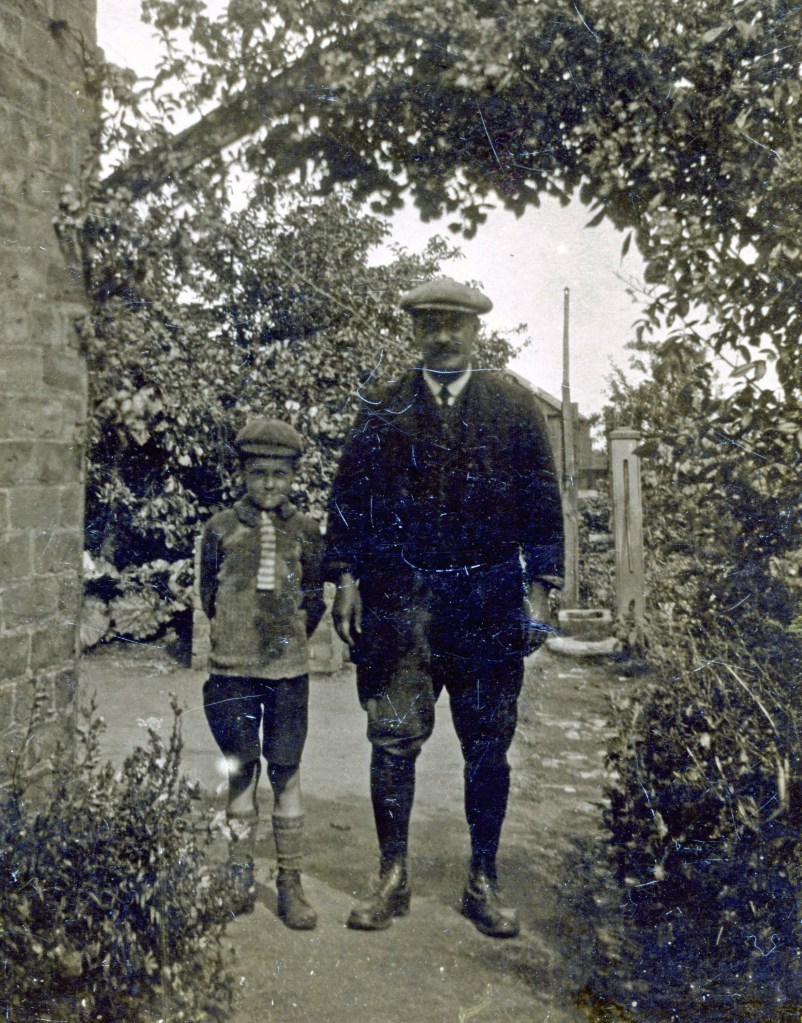
Charles with son Ted in leafy surroundings

In 1926, at the age of 51, he was forced to sell up and move his young family to Clara’s home village of Helpringham. They lived at the beautiful Rose Cottage which Clara’s widowed mother was renting and later used their considerable savings to buy the cottage themselves. As Charles’ condition worsened they built a special wooden outbuilding for him to sleep in, with big windows to let in plenty of fresh air[22].

After a long and painful illness, Charles died in 1934 from heart disease caused by his chronic bronchitis[23]. Described as a strict father by his sons and still proud of his working class roots (he didn’t want them to go to university), Charles had worked hard to change the fortunes of the Ball family and he left Clara, his “dear wife”, with almost £14000 which would be worth at least £1 million today[24][25].

References


[1] 1881 census of England & Wales
[2] White’s Directory of Sheffield, 1879
[3] Burngreave Voices, Sheffield Galleries & Museums Trust, https://www.museums-sheffield.org.uk/project-archive/burngreave-voices/housesWorkers.html
[4] 1891 census of England & Wales
[5] 1901 census of England & Wales
[6] Sheffield Independent, 2 July & 21 August 1895. Sheffield Daily Telegraph, 28 May 1896
[7] Wages in the United Kingdom in the 19th century, Arthur Bowley, 1900
[8] Evans, A. D. (1909). An Iron Trade Sliding Scale. The Economic Journal19(73), 122–133. https://doi.org/10.2307/2220530
[9] 1901 census of England & Wales
[10] Malcolm Bull’s Calderdale Companion, https://freepages.rootsweb.com/~calderdalecompanion/history/j.html
[11] Marriage certificate of Charles Edward Ball and Emily Moore
[12] White’s Directory of Sheffield & Rotherham, 1905
[13] Photo of Charles Edward Ball outside his seed shop
[14] Sheffield Daily Telegraph, 15 Aug 1904
[15] Sheffield Daily Telegraph, 5 Nov 1909
[16] UK and Ireland, Find a Grave Index, 1300s-Current
[17] Death certificate of Emily Ball
[18] Recording of conversation with Dina Maclean, 2010
[19] Sleaford Gazette, 17 Sep 1910
[20] 1921 census of England & Wales
[21] 1988 OSHA PEL Project – Grain Dust, National Institute for Occupational Safety and Health, https://www.cdc.gov/niosh/pel88/graindst.html
[22] Recording of conversation with Dina Maclean, 2010
[23] Death certificate of Charles Edward Ball
[24] Will and Grant of Probate of Charles Edward Ball
[25] Purchasing Power of British Pounds from 1270 to Present, MeasuringWorth.com, https://www.measuringworth.com/calculators/ppoweruk/
A credit to his country

The first story I want to share is that of William Pearson (1875-1944), my great great grandfather on my mother’s side. He certainly had some hard times but was clearly a man of great fortitude and honour. He went from being branded a “failure” to being commended on the front page of the local newspapers. William’s story begins in 1896, a few months after his elderly father Luke had died.

William, who had just turned 21, took over his father’s beerhouse and grocer’s shop in the small village of Edingley in north Nottinghamshire[1]. A few years later he married local girl Annie Cope and they had 5 children together, including my great-grandfather Alf. By 1911, all the family were still living together in Edingley at what was called the ‘Railway Tavern’[2].

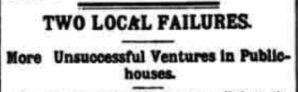
Not long after though William fell on difficult times. Clearly not making enough money from his father’s business to support his family, he had also been working as a market gardener and as the local postman to make ends meet. In 1912 however things started to unravel. He was sued by a brewery company for non-payment of a loan and 12 months later was in front of the ‘Official Receiver’ in Nottingham having filed his own petition for bankruptcy. One newspaper reported the case under the headline “local failure”[3].

Headline about William Pearson and another local innkeeper in the Nottingham Daily Express

But it wasn’t just a downturn in trade which did for William. In his bankruptcy hearing he told of “illness of himself and his wife and family”. It transpired that for several months William had been in a sanitorium for consumptives and Annie and the children had also been sick for a long time, requiring medical attention[4]. Consumption, now known as pulmonary tuberculosis, was still a major public health issue in the early 20th century and the BCG vaccine was yet to be developed. Working in a crowded indoor environment such as the tavern would have increased the risk of exposure for William and Annie[5] and having contracted the infection they, and their young family, would likely have suffered from persistent coughs, extreme fatigue and night sweats[6]. Little wonder then that he was unable to keep the wolf from the door.

After such a debilitating illness and public humiliation, you could forgive William if he had quietly retreated to Edingley to spend his days eking out a meagre living from his small garden. But not William. When war broke out shortly after, despite now being over 40, he joined the army and served for nearly five years, performing “excellent secret service” in India.

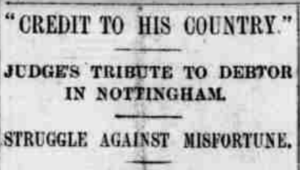
On his return, although still in poor health, he was keen to get back on his feet and applied to the County Court to be discharged from his bankruptcy. He wanted to use a Government grant to buy some land and set up a market gardening business, and offered to pay back some of his debt in monthly instalments[7]. Once again William found his story reported in the local newspapers, but this time they related his “struggle against misfortune” and quoted a glowing tribute from the judge:

“[Mr Pearson] was the subject of misfortune, taking the shape of illness and, with regard to his subsequent career, he is a man of whom it may fairly be said that he is a credit to his country, deserving every consideration that can be extended to him and every expression of commendation and every honour that can be paid to him by a grateful country.”

Nottingham Evening Post, 16th October 1919
Headline in Nottingham Evening Post

The judge granted William’s request, but it seems that once again his business didn’t work out, and he ended up working out his days as a banksman at Clipstone colliery, supervising the miners as they entered and exited the pit[8]. Although it may not have been his first choice, it was a crucial job to ensure the safety of the workers and William was entrusted with a high level of responsibility. His bad luck continued when he and his son Lester found themselves ‘locked out’ of the pits for 3 months during the 1921 mining crisis for refusing to accept wage reductions[9]. Once again, in the face of adversity, William Pearson acted with bravery and integrity.

In the end, William retired from the colliery due to incapacity[10], perhaps suffering from the long term effects of his bout of TB. He died in 1944 at the age of 68[11], but will be remembered as a man of honour and a credit to his family and his country.

References


[1] Newark Advertiser, 29 April 1896
[2] 1911 census of England & Wales
[3] Nottingham Daily Express, 16 July 1913
[4] Nottingham Evening Post, 16 October 1919
[5] Working conditions and tuberculosis mortality in England and Wales, 1890–1912, https://www.ncbi.nlm.nih.gov/pmc/articles/PMC4875674/
[6] Tuberculosis (TB) – Symptoms, https://www.nhs.uk/conditions/tuberculosis-tb/symptoms/
[7] Nottingham Evening Post, 16 October 1919
[8] 1921 census of England & Wales
[9] ‘Census 1921 – Baby it’s Cold Outside’, https://mlfhs.uk/blog/baby-it-s-cold-outside
[10] 1939 Register
[11] England & Wales Death Index

In the beginning

I’ve been researching my family history for years. I began in 2006 and got started by talking to older relatives and inheriting past research done by others. I bought the ‘Family Historian’ genealogy software and signed up to Ancestry.co.uk. I collected lots of names and dates and worked my way back successfully along multiple lines using online census records and certificates ordered from the GRO. I produced a family tree for my grandmother’s 80th birthday which she proudly hung on her wall.

But eventually, all the names and dates began to lose their interest. My inner desire to catalogue, in this case applied to my ancestry, could only go so far. I started wanting to know more about who these people were, what they did and what their lives were like. I wanted to share what I found out with my family and write everything down so my children would be able to read about their roots when they were old enough to care.

I set a goal to write biographies of as many of my ancestors as possible, containing not only the dry facts of their births, marriages and deaths, but a broader, more colourful picture of who they were, the events and decisions which shaped their lives and the times in which they lived. I wanted to put all of this together in a book, illustrated with photos and pictures of original documents, embellished with historical context and smartly printed and bound.

I gradually realised that by doing this I was falling into the trap of ‘completeness’ again, and the project became more about finishing all the biographies and less about actually sharing the stories with those who may want to read them. So my new plan is to publish the things that I find out on this site as I go along, without worrying if they are ‘complete’, and to slowly build a collection of interesting posts for my family, and anyone else who’s interested, to read and hopefully enjoy. And maybe one day I’ll bring these together and finally produce the big book of Balls that can sit proudly on my sons’ bookshelves, just as my first family tree hung on my granny’s wall.